


Ben Thompson of Stratechary fame had an amazing interview with Mathew Ball, the architect of the perennial annual “State of Video Gaming” deck: https://stratechery.com/2026/an-interview-with-matthew-ball-about-gaming-and-the-fight-for-attention/
There was a point in the interview that made me perk up as it perfectly articulated why video games struggle with younger demographics. Thompson and Ball point out that attention was a greenfield in the 80s, 90s, and 00s and video games were the dominant medium for interactive entertainment. But now games are losing the attention economy to multitasking hyper sticky services with lower barriers to entry.
…it turns out there was more latent attention to be grabbed, which is the payoff for me making a prediction market bet is not just the time I spent researching and making the bet. It’s the underlying, always in the back of my mind, this bet’s out there with the unexpected notification, “Oh, it hit”, or, “Oh it lost”, or whatever it might be, which a video game still you have to be focused on, it doesn’t get the sort of latent thrill that these other aspects do.
MB: I love this point, Ben. You’re spot on because one of the things that I hear a lot from the ecosystem now is that what we often believed was one of the unique strengths of the industry, massive attention, singular attention, is in many ways the Achilles heel, because when you take a look at the time of use, you say Americans engage with 30 hours of content per day, and that’s because we’re multitasking.
The one challenge here is I can be on TikTok and Twitter and Polymarket while watching television, but I can’t actually have both hands on controller in a live multiplayer match while multitasking. Gaming is actually one of the few things that drives you all the way in, to the exclusion of others, and therefore if any of them happens to trigger your brain in a distracting way, which could just be you just lost 100 bucks, it could just mean you won 1,000 bucks, or it can be the OnlyFans star that you subscribe just told you a new pay-per-view video is available. Guess what? A lot of those people are gone, and they can multitask in other ways, but not that.
The other thing that I think is separate here is a lot of ink is spilled over online sports betting, which I think is unequivocally a pandemic in the United States, but to put this in perspective, online sports betting had roughly net losses in the United States of $17 billion last year across 35 states, I think. iGaming, which is real money gaming, mostly slots, but some poker, some craps and blackjack, was $11 billion. 11’s a lot less than 17, but it’s only legal in seven-
AAA gaming is a single threaded experience that requires a user’s full attention to play: two hands on the controller while constantly absorbing visual and audio communication to process decision making. Immersion is the ultimate goal of most AAA games.
On the opposite end there is the multithreaded service stack where each individual service strives to be as stick as possible for as little effort as possible. The stack forms one makeshift Voltron-service that renders all other forms of entertainment that require attention ineffective. Lack of immersion is a feature not a bug.
The Multithreaded Stack
I am calling this the Brain Rot Stack: multi-threaded interactivity as a minimum stack of 3 services where the stack has at least one of each:
Always On Stream Longform content on a main screen (1)
Sports, low stakes television (i.e. reality show), spectacle films, game streams
Asynchronous Stakes Services with delayed gratification and variable reinforcement (3)
Sports betting, prediction markets, dating apps, social media posting, texting (2)
Infinite Feed Traditional doom scrolling and infinite content providers
TikTok, Instagram, Reddit, X, Only Fans, YouTube, online shopping
The stack is powerful because the layers compound into an air tight experience that leaves no second unserved.
Example Brain Rot Stack:
Television with an NBA game on
Prediction market making bets on the game
Texting in a group chat
Checking X for posts about the game and betting advice
Scrolling on TikTok
83% of Americans report using mobile devices while watching TV
https://research.mountain.com/insights/an-exploration-of-second-screen-use-by-tv-viewers/Sports betting revenue climbed to $17B in 2025
https://finance.yahoo.com/news/u-sports-betting-revenue-soars-204000976.htmlVariable reinforcement schedules are extremely powerful
https://www.gwi.com/reports/second-screening-infographic
Dopamine per Minute: Single Threaded AAA Games vs the Multithreaded Services Stack
Let’s put the Brain Rot Stack’s attention capturing advantages to measurement. I’m going to define a metric to measure which entertainment product produces the most rewarding moments per minute. Single threaded AAA games vs multi-threaded interactive service stack.
Reward Moments: a discrete event that reinforces engagement via one of:
Progress (rank up, objective complete)
Social validation (message, reaction, chat)
Variable reward / uncertainty resolution (loot reveal, bet resolves, notification result)
Skill feedback (kill, clutch, combo, highlight-worthy play)
Novelty (new clip, new post, new headline)
I’m going to put 15min of AAA gaming against 15min of multithreaded stacked services and see how gaming fares against the new king of interactive entertainment. I’m employ a weighted system as not at moments are equal:
1 = micro-hit (like, short clip, minor in-game reward, normal kill)
2 = medium (round win, notable highlight, meaningful message)
3 = peak (rank promotion, rare drop, bet win/loss, major plot beat)
Let’s take a look at the AAA contender: a modern COD match
Reward Moments: round start/end, kill, death, objective tick, reward screen, loot reveal, rank update, teammate message, etc.
Video Example:
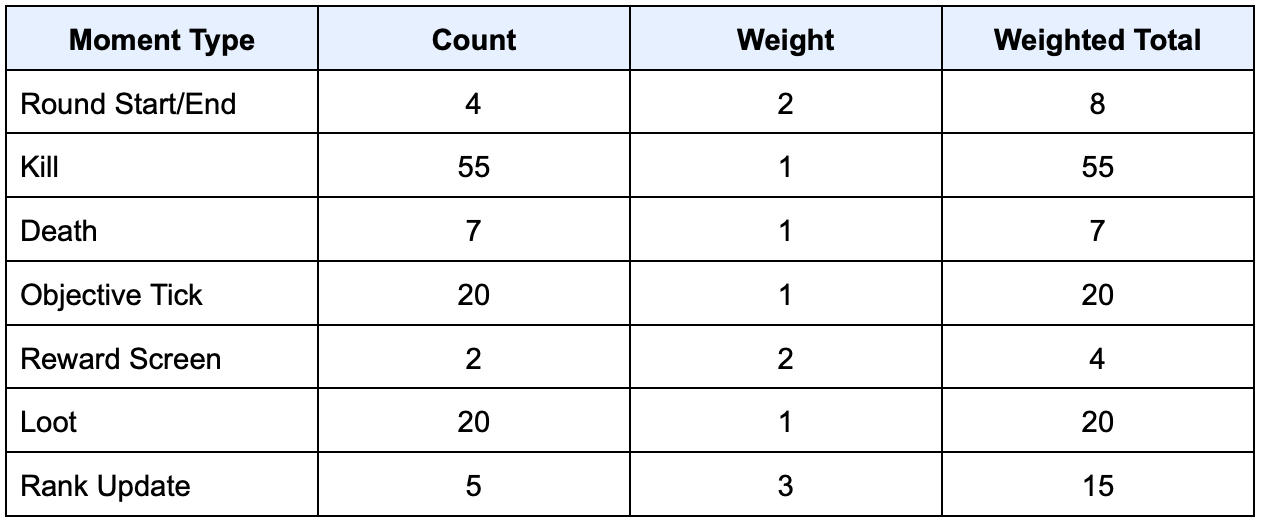
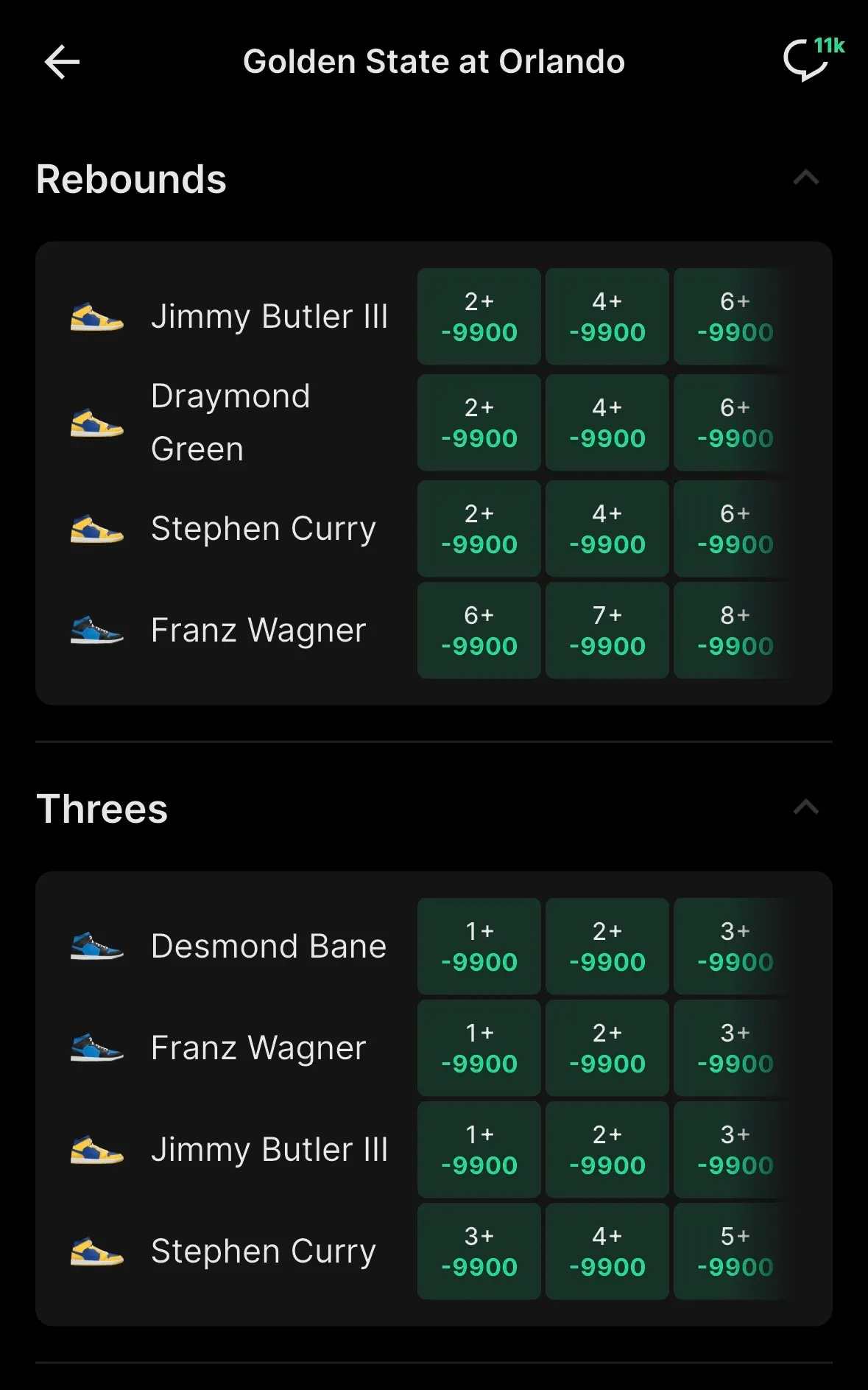
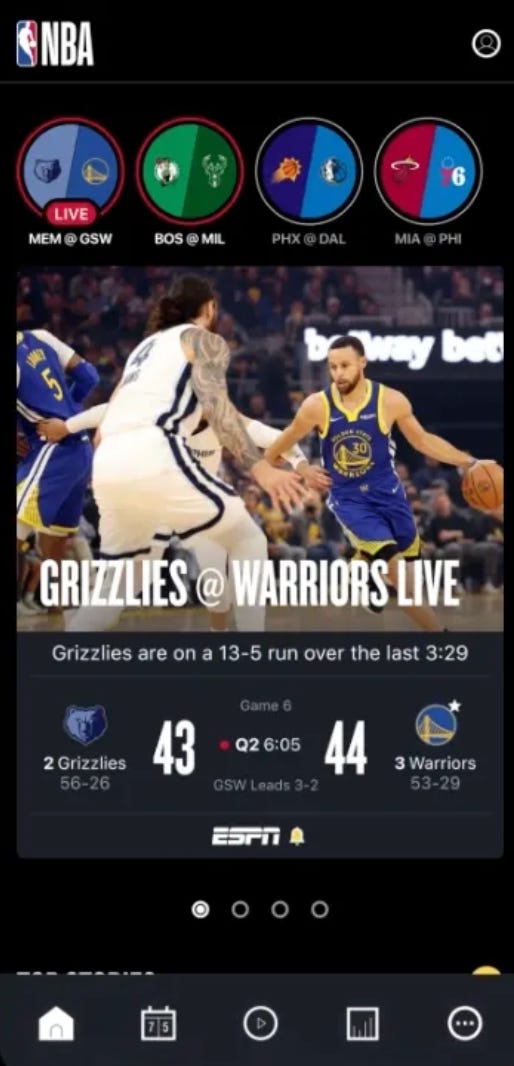
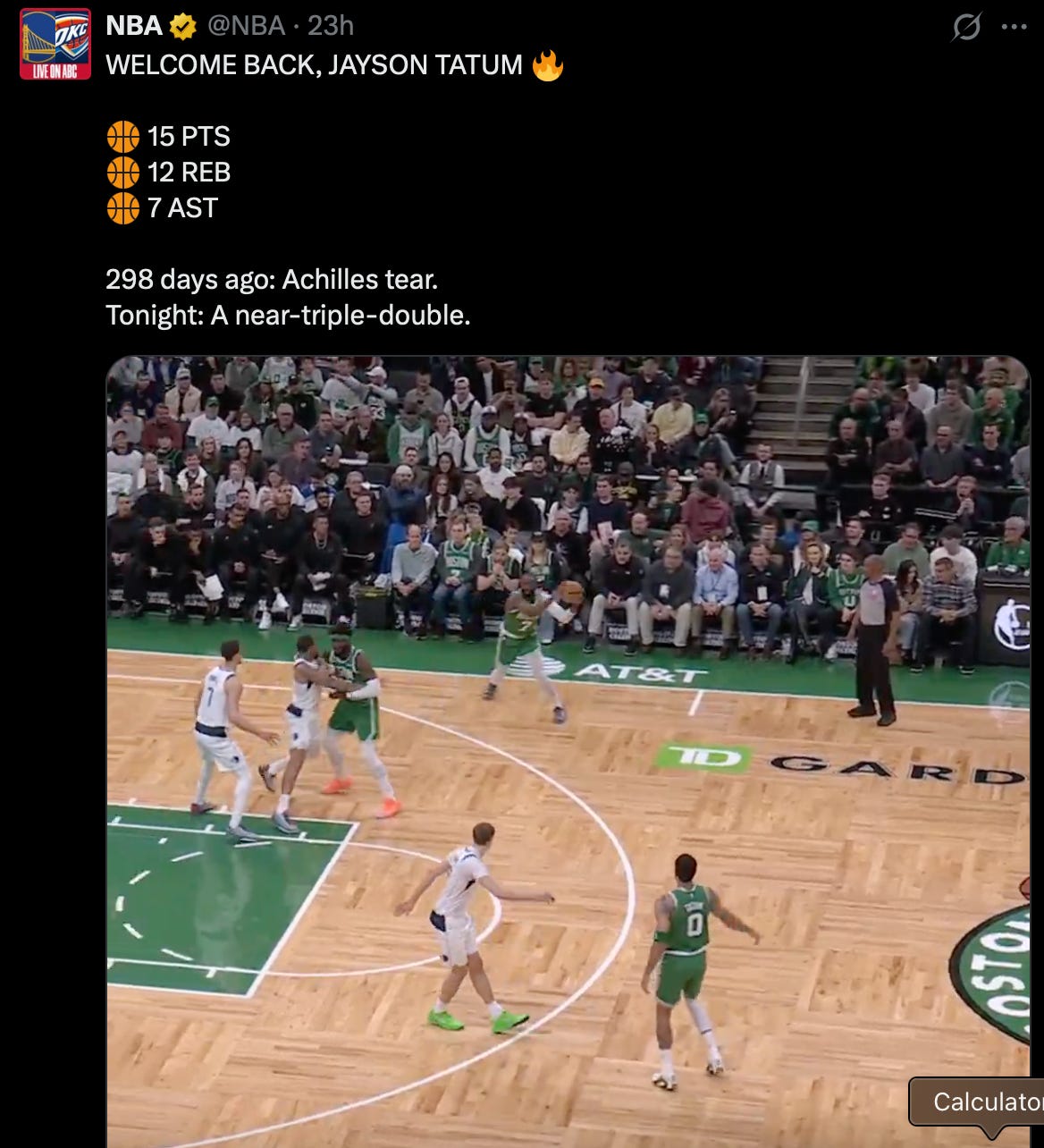
Let’s take a look at the Multithreaded Service Stack: NBA + Kalshi + texting + X + TikTok
Reward Moments: highlight play, a new x post/clip, text send/receive, meaningful odds update, bet made/resolves, video scroll, etc.
Video Example:
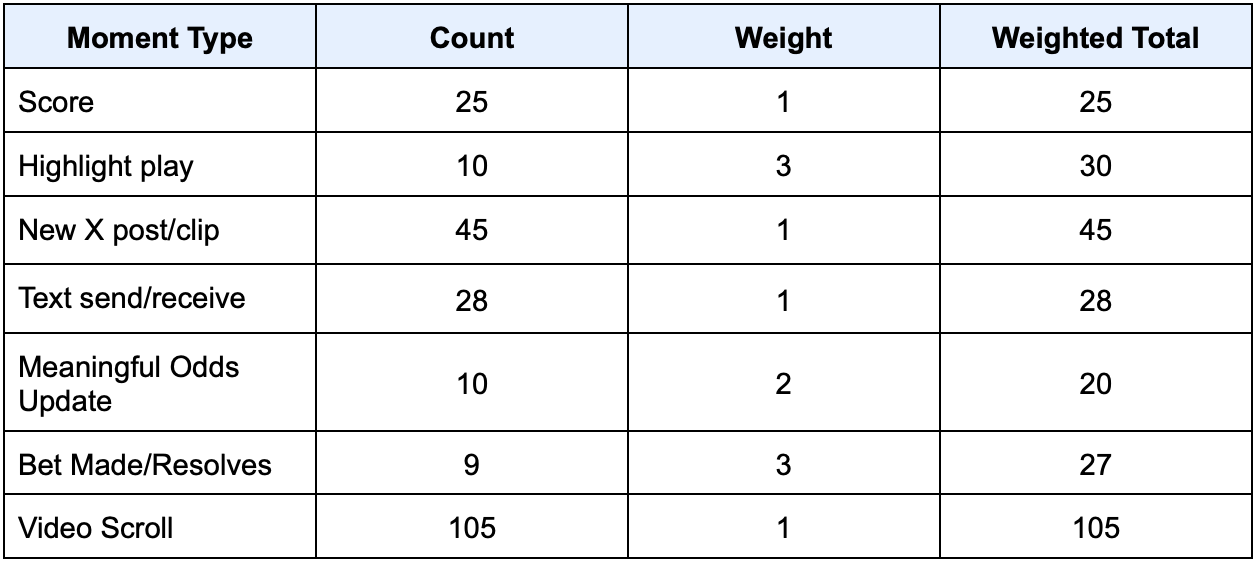
Weighted total (for 15min):
AAA Gaming 129
Multithreaded Service Stack 280
Weighted Reward Moments per Minute:
AAA Gaming 8.6
Multithreaded Service Stack 18.6
It’s not even close! Yes, CoD is more interactive and rewarding than watching an NBA game, but stack wins because it runs multiple reward channels concurrently and keeps reward moments even when you’re ‘not playing.’
When I was a teenager growing up with PS1/N64 and PS2/Game Cube, video games were infinitely more engaging than the onslaught of multi-cam sitcoms airing when I got home from school. I imagine a teenager today feels the same way about boring old AAA games when compared to a stack of sticky services.
Attention Wars: How Games Can Compete With and Overtake the Brain Rot Stack
The last two decades of AAA have been chasing the combination of realistic rendering with the on-rails experience of a spectacle film. This is amazing for a 35 year old with a war chest of discretionary to spend on expensive PCs or consoles and $70 experiences. But for the <25 year old segment of the industry these experiences are too singular and contained.
Developers need to create interconnected stacks of game systems and mechanics to reclaim video gaming’s rightful throne as the most interactive experience available.
Core Gameplay The main gameplay
Reinforcement Asynchronous actions, asymmetric payoffs, social touchpoints
Engagement Glue Feed and connected layers
Asynchronous actions (resolve later; reactivate players)
Players commit to an action now while the outcome resolves later (even if they’re not playing).
This creates “latent thrill”, uncertainty resolution, and provides a reactivation point for players.
Life Sim Love Letter: Send a love letter from one character to another and wait for the response
RPG Companion Missions: The classic “send your allie away” style mechanic where allies can alter places or conflicts before you show up
Extraction Revenge Contracts: Put a bounty on players that wronged you and wait for the contract to be fulfilled with evidence of the action
Asymmetric payoffs (small input, big emotional resolution)
Low-effort actions that trigger variable but sometimes big outcomes.
Raises reward density without requiring a full session.
FPS Contract Picks: Pick 1 of 3 contracts (e.g., ‘pistol only’); payout can roll into a high-tier reward if you overperform
MOBA Prop Bets: Offer predictions (e.g. first kill) with player-specific odds that can be publicly wagered on before the match
Match-3 Daily Bonus Move: One ‘bonus move’ a day that can cascade into a jackpot on board clear.
Social touchpoints
Provide effortless communication for each component from narrative to specific content.
Make social validation a constant micro-layer without demanding synchronous play.
UCG Creator Masterclasses: Live events by the most popular creator on how to build and grow a community
Narrative Player Podcasts: Allows users to submit podcasts about latest episode recaps and dishing analysis
Gacha Pull Posts: A reddit style feed where every premium pull grants one action such as a post post or like
Feed-like discovery (keep them in your ecosystem)
A “what’s happening now” feed inside the game: clips, builds, challenges, meta shifts.
Prevents the leakage: “I’ll just check TikTok / X” becomes “I’ll check the in-game feed.”
RPG Economy Watch: Market trends and hot items in a CNBC style news report that covers the different economies and factions in the game
4X War Room Recap: Daily recap of major battles, map changes, and notable alliance changes for the server narrative
Fighting Move of the Day: Players submit clips to a community video feed where viewers can view, rate, and rank clips
Connected Layers (rewards spread across multiple channels)
One action produces multiple forms of reinforcement (progress + social + novelty).
Mimics the “stack compounding” effect while staying inside the game.
FPS Clutch -> Clip -> Kudos -> Unlock
A clutch triggers an auto-highlight clip; teammates react with one-tap kudos; crossing a reaction threshold grants a visible title/intro and bonus mastery XPRacing PB Lap -> Ghost Challenge -> Rival Attempts -> Recap + Rewards
A PB creates a ghost challenge sent to connections, rivals attempt asynchronously, deadline for challenge passes and recap of attempts are created and rewards are grantedMMO Dungeon Clear -> Loot Reveal -> Party Photo Card -> Guild Shoutout
Clear triggers guild loot reveal, auto raid photo card with members and loot, guide members react on guild feed highlights, dungeon contributes to weekly guild goalsFighting New Tech Discovered -> Clip Submission -> Community Verification -> Training Module
Discovering a new tech prompts a clip, community verifies/labels it, verified tech unlocks a training module and badge for discoverer
Don’t think of this as “make games more addictive” but instead as an evolution of interactivity; like going from Super Marios Bros to Sonic the Hedgehog 2 or OG Street Fighter 2 to Marvel vs Capcom 2.
Video games in 2026 need to offer a breadth of experiences that can offer parity attention stacks with modern entertainment consumption patterns. To capture the younger generation you can no longer ship single threaded experiences meant to simulate and immerse. Games need to contain their own Brain Rot Stack within them, hooking players with layered systems and leaving no oxygen for doom scrolling.