


I’ve had a book review series in my previous blog where I covered game industry books such as Console Wars, Masters of Doom, and Blood, Sweat, and Pixels. Those books are GOATed modern day game literature and should be required reading by anyone wanting to make video games their career. But I feel like it’s time for game developers to level up and start to think outside of the “all we need to do is make a great game and it’ll market itself” box. I’m going to highlight my favorite books outside the video game industry. What is the book not on your game-reading-digest radar that will secretly level-up your game skills?
To kick it all off:
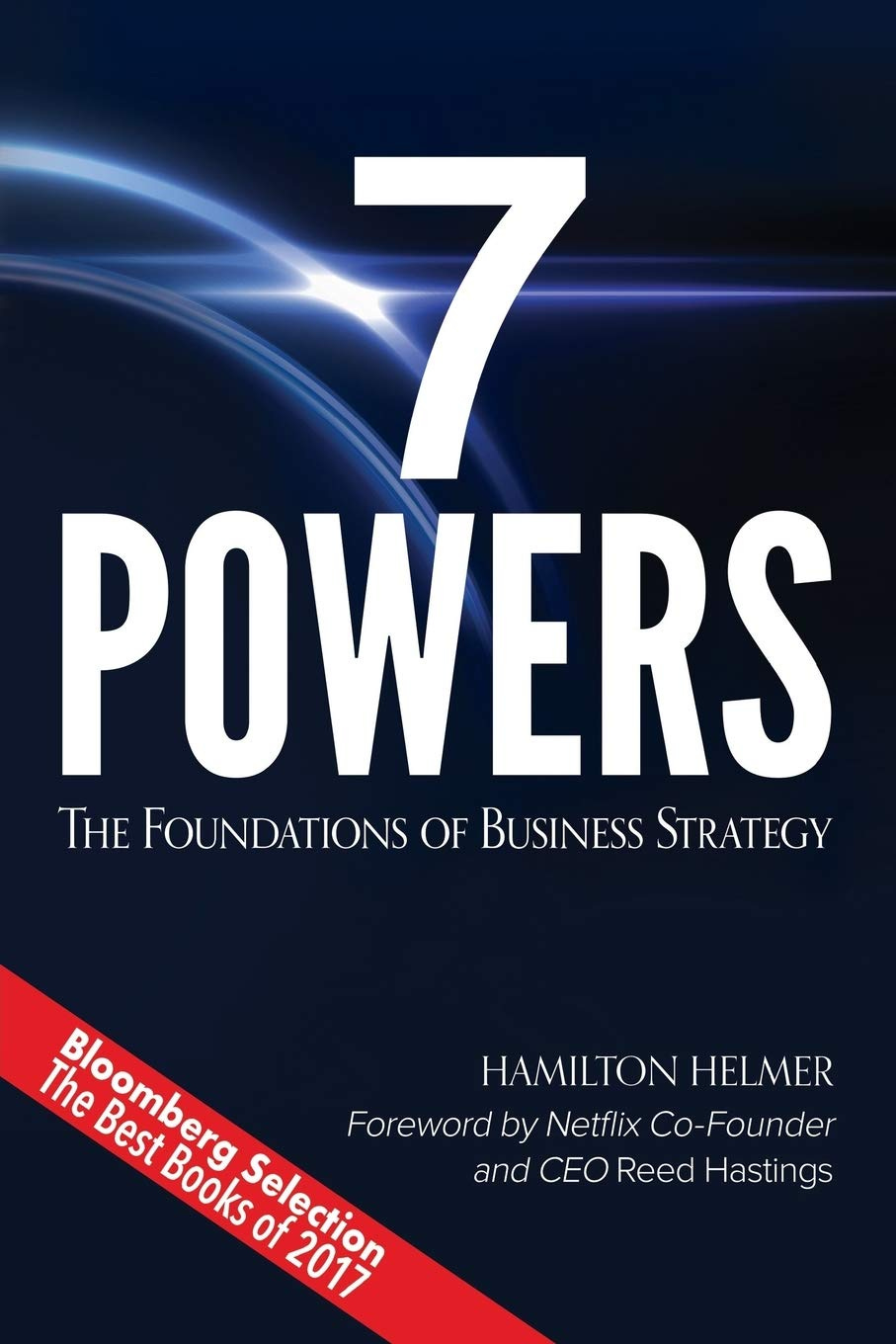
7 Powers: The Foundations of Business Strategy
I know, it’s an insanely dry title that reads like a textbook you were forced to buy in undergrad. Have no fear, this book will change how you think about products, companies, and positioning in overall industries if you let it. Please brace yourself to stomach a barrage of consultant speak but I promise you, this will be worth it in the end.
7 Powers is a strategy framework for evaluating a business’s ability to create persistent differential returns. In normal speak that’s “how can we identify patterns in successful business so that we can describe why they succeed over their competitors?”. Hamilton Helmer argues that over his 200 strategy consultant projects, he’s been able to identify 7-powers that give companies an enduring competitive advantage.
This book is the DARLING of silicon valley VCs. I first became aware of 7 Powers listening to Ben and David on Acquired (podcast). Helmer probably owes them commission for glazing 7 Powers every episode. But since I’ve been constantly inundated with powers over a 4 hour podcast about toilet paper companies, I’ve noticed these powers popping up in articles, blogs, and videos by some of the brightest minds in tech, VC, and PE. Clearly the people with all the money love this, so we need to understand why this book is essential reading for VCs.
The TL;DR 7 powers:
Scale Economies Lower unit costs at higher volume let you underprice competitors or earn superior margins
Shared central teams at a large publisher
Network Economies Your product gets more valuable as more people use it, pulling in even more users
UCG ecosystems with 2-sided marketplaces
Counter-Positioning You adopt a new model incumbents can’t copy without sabotaging their existing business
Freemium business taking shape in the 2010s
Switching Costs Once customers adopt you, leaving becomes painful (time, money, risk, workflow, data)
Player progress and identity tied to a single live service game
Branding Durable preference built through trust and meaning, so customers choose you even when alternatives exist
Nintendo’s logo
Cornered Resource You lock up a scarce, valuable asset others can’t access on comparable terms
Patents, talent, resources
Process Power Embedded, hard-to-replicate ways of operating (systems, culture, know-how) compound advantage over time
Well oiled content pipelines and release cadences
And these 7 powers tend to emerge during certain phases of the business:

That’s great but what does this mean for games?
Reading Hamilton Helmer isn’t going to teach you how to implement A* or optimize UV meshes, this is a high level business strategy framework that is more concerned with decisions made at the “what type of game company should we be?” level than the “should my souls-like have invincibility frames during their roll?” level. But there are takeaways for every level of the game developer stack.
Startup Founders
7 Powers is the bible for pitching a defensible company. This will separate you from “we are jaded AAA devs who worked at Ubisoft and want to make our dream game” to “you’re going to be known in the office as the moron that passed on the money printer that walked in the door 2-years ago.”
Also, and more importantly, you learn how to pick a power to be your core competency. Where is your company going to be truly at a competitive advantage? When do you develop that competitive advantage? What are the power factors that lead to outsized margins?
Indie Devs
Learn to Counter-Position to the max. 98% of indie devs main competitive avenue is Counter Positioning. Master how to build a business where the incumbents are damned if they do, damned if they don’t follow you.
Branding is your long-term aspiration. FromSoftware, Rockstar Games, Naughty Dog, all invoke imagery of games and make a promise of quality. How do you position yourself and your games to be a comprehensive brand?
AAA Dev
Your mission is very easy, understand your company’s power and leverage it. The better you understand the dynamics behind your studio’s success, or lack there of, the better you can make those small decisions that add up to a record setting game. Also, speaking executive is not a bad way to position yourself for a promotion.
Publisher
You also have a simple takeaway, fund games with powers and help games you already funded find powers. Armed with this new knowledge you can identify which of the 50 en vogue genre games being pitched can actually turn into a sustaining business.
With the publishing business itself you have Branding and Process available to you. Turn your publisher into the next target acquisition of big tech or sovereign wealth funds.
Gaming Executive
7 Powers is going to help you identify and cultivate powers. Help your games or services secure powers and leverage those powers as hard as possible.
Know when competitors have powers and learn how to play around them.
Investor
One application is to invest in a portfolio of a single power. Invest in a bunch of live service games with high Switching Cost. Find a basket of studios Counter-Positioning one of the black hole games.
Find Cornered Resources. Literally the best power to early stage invest in. Cornered Resources are like land, they aren’t making more of it.
Juice Network and Scale Economies. These are the obvious growth players or follow-on round targets.
Should I buy this?
7 Powers is a mere 200 pages, much less if you ignore the economic-ish formulas, and can be had for less than $20. For the cost of two beers in Seattle you can gain the ability to break down business with the best of them. Learn to take actions beyond crafting great gameplay and sick art direction. I implore anyone to read this book and not be able to clearly think about the strengths and weaknesses of their business and their competitors. If you want to stop pitching “a fun game idea” and start pitching a money printer, read it.